
 I hope you enjoy this post. If you want my help to build lean muscle & transform your body using a TRX suspension trainer anywhere –
 Meet David…
Senior Executive at a tech company.
Mid-50s. Demanding job. kids.
And struggling.
“Adam, I need help. I’ve tried classes, Peloton, multiple fitness tools. Tried different diets. Nothing sticks. I feel like I’m failing at the one thing that’s supposed to be simple. Can you help?”
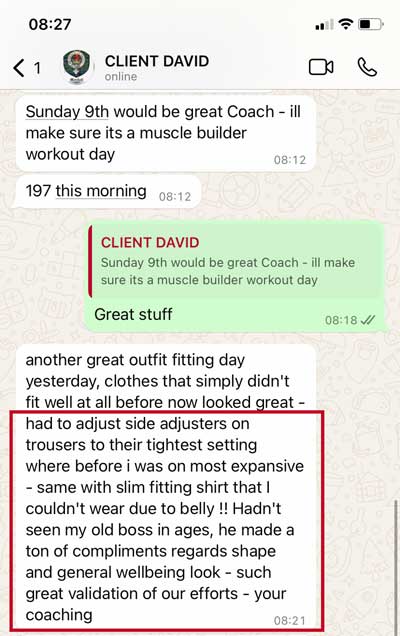
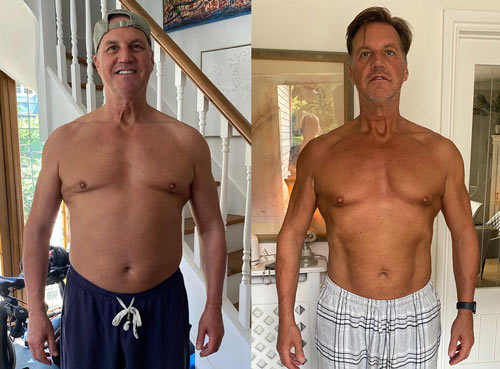
(For transparency his photos and messages are below)
He was frustrated.
Not just about his weight (he was carrying an extra 28 pounds).
But about the constant cycle of starting and stopping.
The guilt from knowing he should be healthier.
The exhaustion from his demanding job making fitness feel impossible.
“I know what I should do,” he said. “I just can’t seem to make it happen consistently.”
This is what I hear from most busy professionals.
They don’t lack knowledge.
They’ve read the articles.
Watched the videos.
Know they should exercise and eat better.
The problem isn’t knowing WHAT to do.
It’s finding an approach that actually fits their real life.
I suggested something different:
“What if you trained at home? 30 minutes. 3-4 times per week. Whenever you can squeeze it in.”
“Will that actually work? Seems too easy.”
“It’s not easy. But it’s effective. And more importantly, it’s sustainable for your life.”
He was skeptical but willing to try.
We set up a simple approach:
Training: 30-minute suspension trainer workouts at home. 4x per week when possible, 3x minimum.
Timing: Whenever it fit. In between meetings or on a morning if he didn’t go into the office.
Nutrition: One carb-free meal per day (dinner). Everything else normal but mindful.
That’s it. No complex meal plans. No 90-minute gym sessions. No unsustainable restrictions.
Week 1:
David managed 3 workouts. Felt hard but doable.
Kept dinner carb-free (protein, fats, vegetables).
Lost 4 pounds.
Week 2:
4 workouts this week. Starting to understand the muscle-centric technique.
Energy starting to improve slightly.
Lost another 4 pounds.
Week 4:
This is when David sent me a message:
“Something’s different. I have more energy. I’m not crashing in the afternoons anymore. My clothes are fitting better. And I’m actually looking forward to workouts instead of dreading them.”
This is the shift that matters.
Not just weight loss. But the energy transformation.
When your body starts working properly (better insulin sensitivity, building muscle), everything improves:
- Energy levels
- Mental clarity
- Mood stability
- Sleep quality
- Stress resilience
David was experiencing all of this.
Week 8:
David had lost 15 pounds.
But more importantly, he told me:
“The things that are apparent now are higher energy levels, positive moods, self-gratification in terms of positive body image.”
This wasn’t just about looking better.
It was about feeling capable again.
Having energy for work AND hobbies instead of being exhausted.
Feeling confident instead of self-conscious.
Being productive at work instead of foggy and stressed.
Week 12:
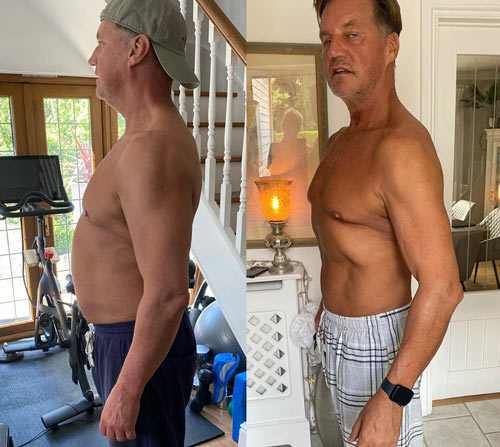
Final weigh-in: 28 pounds lost.
But David’s message focused on something else:
“It’s not just the physical improvements. It’s the mental ones. I’ve got tons of energy. I’m more patient with my kids. More focused at work. My skin is better. And I feel like I’m setting a good example for my family instead of just talking about health.”
This is what sustainable transformation looks like.
Not a crash diet that leaves you depleted.
Not unsustainable gym schedules that fall apart when life gets busy.
But an approach that improves your entire life because it fits your actual life.
David trained 3-4 times per week. 30 minutes per session.
That’s 90-120 minutes per week total.
Less time than one movie.
But it transformed his energy, health, and confidence.
The key was three things:
1. Accessibility
Training at home meant no commute. No waiting for equipment. No feeling judged.
Just turn around in his home office and train.
2. Efficiency
30-minute muscle-centric workouts created better results than his previous 60-minute gym sessions.
Because technique matters more than duration.
3. Sustainability
One carb-free meal per day was simple enough to maintain.
Not multiple complicated meal plans.
Just one daily change that dramatically improved his insulin sensitivity.
Two years later, David has maintained his results.
Still trains 3-4x per week at home.
Still keeps dinner carb-free most days.
His weight has stayed stable within 3-4 pounds.
Because it’s not a “diet.” It’s just how he lives now.
This is the difference between temporary results and lasting transformation.
Temporary:
- Extreme approach
- Unsustainable time commitment
- Restrictive eating that can’t last
- Results disappear when you stop
Lasting:
- Moderate approach
- Sustainable time commitment
- Practical eating you can maintain
- Results stay because the lifestyle stays
David told me the biggest surprise was the energy transformation. He expected to lose weight.
He didn’t expect to feel 10 years younger.
That’s what happens when you fix your metabolic function (insulin sensitivity) instead of just cutting calories.
Your body starts working properly again.
You don’t need a gym, Program complexity, and diet fads…
Just simplicity, technique, and consistency.
Here’s to your Fitness Freedom!
Coach Adam
Founder, Fitness Freedom Athletes
P.S.
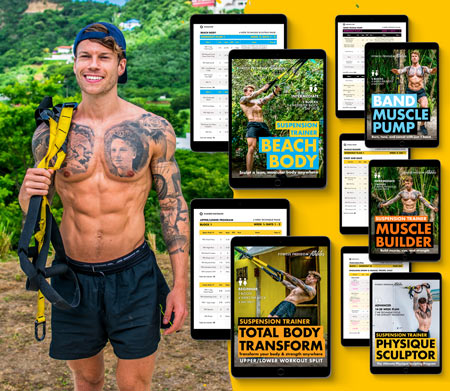
One of David’s messages to me, everything he did, I teach you in my Programs above:





0 Comments