

Tired of endless crunches that don’t deliver real core strength?
Most routines only target surface muscles, leaving 5 out of 7 deep core stabilisers completely underdeveloped…
Causing back pain and poor posture.

But after coaching thousands with TRX suspension training…
I’ve seen what happens when you train your core as an integrated system.
So in this post, I’m going to show you 7 TRX core exercises to target every layer of your core for real strength – at any level…
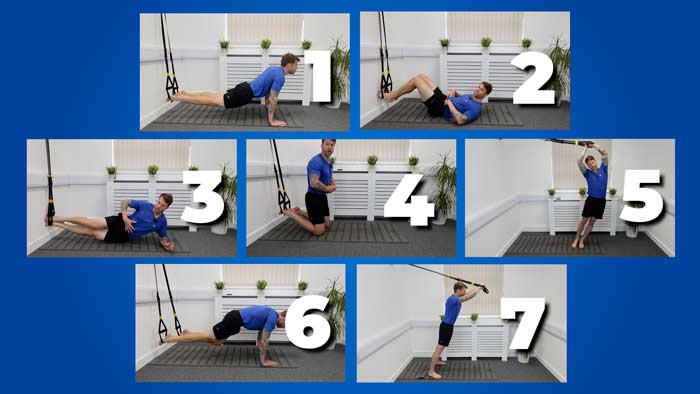
Plus how to build visible abs, and a simple TRX core workout plan to put it all together.
Want the best 3 core exercises to start with laid out for you, week by week?
Grab the free 4-week TRX core workout plan below...
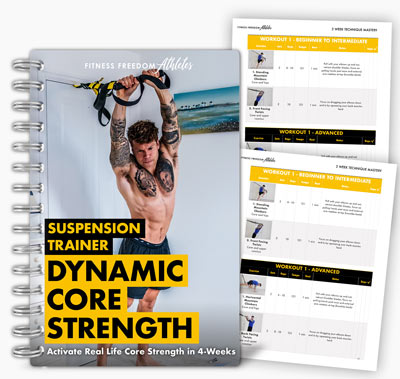
Free Dynamic Core Strength in 4-Weeks (Suspension Trainer Plan)
Build a core that stays strong while you move, protect your lower back, and feel solid in everyday life again…
To start…
Let me show you how to strengthen the hidden muscle that’s responsible for why you slouch after hours at your desk…
For the complete TRX exercise list, see my 16 best TRX exercises post
Don’t have time to read the post in full? Then watch the video below to learn the 7 TRX core exercises for deep core strength:
Core 1: Strengthen Your Slouch
Think of your spine like a sailing mast with ropes keeping it upright and stable.
Those ropes are your erector spinae, deep muscles that run from your lower back all the way up to your neck….
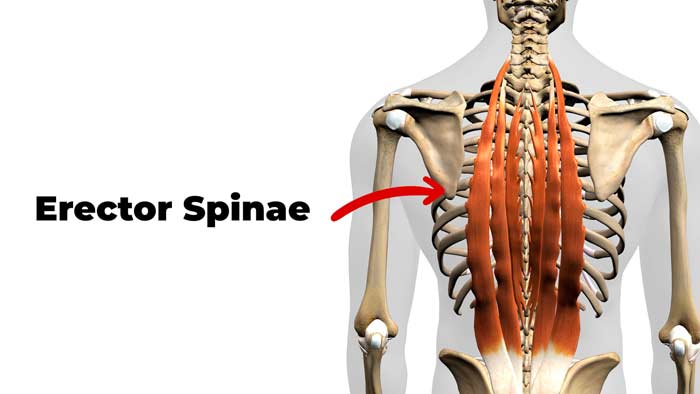
But when you sit hunched over a computer for hours, these muscles get slack and weak, causing you to slouch forward.
Strengthen them, and you’ll have strong internal ropes keeping you tall and upright.
But how do you do that?
Let me show you how so you can counteract hours of desk sitting…
TRX Erector Spinae Core Exercise
We’re going to use suspension trainer Supermans Exercise.
But with a slight variation…
- Unfold your body, keeping your core tensed.
- THE VARIATION: Hold at the top for 5 seconds.
- You should feel the middle of your back squeezing to hold you in this position.
- Then curl back in, keeping your abs tensed.
Now that your postural muscles are awake…
Let’s move on to the muscle group that when weak, can pull your pelvis completely out of line
Core 2: Re-align Your Pelvis
Imagine your body is like a relay team, your hip flexors are the sprinter who carries the baton first.
Their job is to lift your legs efficiently when you walk, run, or climb stairs….
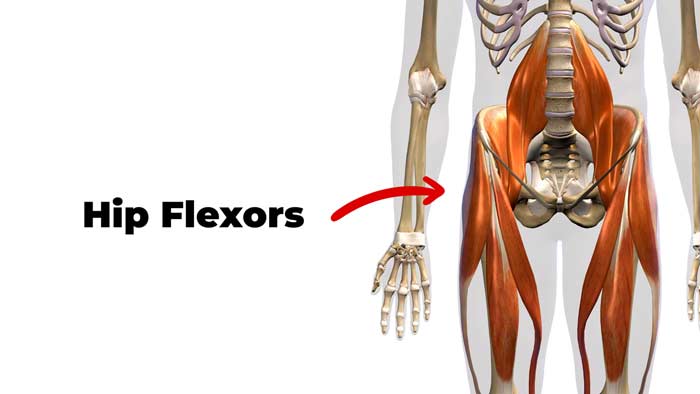
But when you sit all day, this sprinter becomes the weakest link on the team, so your other muscles have to work overtime to compensate for the weakness.
This compromises your movement abilities and can lead to compensatory pain, especially in the lower back.
Strengthen these muscles, and you enhance daily and sporting movements.
But how do you do that?
Let me show you…
TRX Hip Flexors Core Exercise
Mountain climbers are your go-to exercise for strengthening your hip flexors.
There are 3 levels, so start with the one that suits you, and move up once you can do 15 controlled reps each side…
Level 1 – Standing Climbers (Beginner)

- Set your straps to a long length, and hold them under your armpits, facing away from the anchor, feet together.
- Pull your belly button in towards your spine to switch your core on.
- Drive one knee up and across towards the opposite side: 1 second up, a 2-second squeeze at the top, 1 second down.
- Let your body rotate naturally, keep your head up, then switch sides.
Level 2 – Increased Angle (Intermediate)

Same movement, but hold your hands out in front of you, like a chest press, and take a small step back. Your core has to brace harder, and you build shoulder stability too.
Level 3 – Feet in the Straps (Advanced)
- Get your feet in the straps, engage your core and get your bum right in the air.
- Squeeze your abs and bring your right knee to your right elbow, and hold it there for 2 seconds.
- Slowly bring it back down, then repeat on the left side.
- Aim for 6–10 clean reps each side.
Now that you’ve restored proper hip function…
Let’s target the muscles that control your side-to-side movement, because when they’re weak, every twist and bend puts dangerous stress on your spine…
By the way, if 7 feels overwhelming, grab my free core strength plan below…
It’ll show you the 2 exercises to focus on to build real-life core strength quickly, starting at a beginner level…
Free Dynamic Core Strength in 4-Weeks (Suspension Trainer Plan)
Build a core that stays strong while you move, protect your lower back, and feel solid in everyday life again…
Core 3: Build Rotational Power & Agility
Your obliques are like your body’s power steering—they control how smoothly you twist and bend to the side.
When they’re strong, every rotation is effortless and precise…
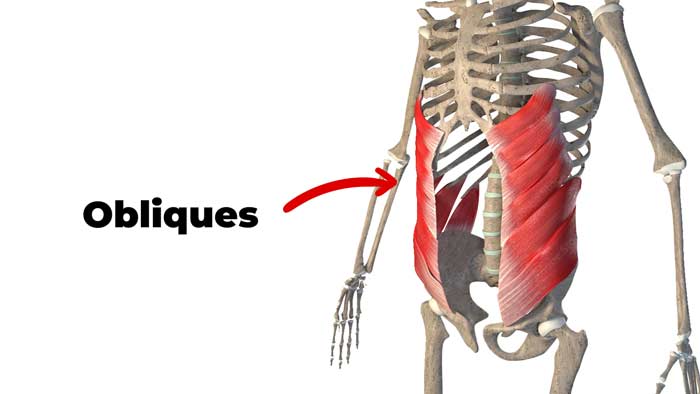
But if your obliques are weak?
It’s like trying to steer a car with broken power steering: every turn feels clunky, and your spine ends up absorbing all the stress.
That’s why you sometimes feel that sharp twinge when you twist or bend the wrong way.
So, how do you upgrade your “steering system” and protect your spine?
Let me show you…
TRX Obliques Core Exercise
Side bends are the winner – Get the straps directly above your head…
- Gently bend to the side and stretch out your core.
- Hold at the bottom and feel that stretch down your side.
- Then focus on squeezing your whole core again to come back up.
- Give an extra squeeze of your core, and then repeat the exercise movement…
Now that you’ve built side-to-side control…
Let’s target the muscle that acts like your body’s natural weight belt
Core 4: Strengthen Your Natural Lifting Belt
Ever tweaked your back just picking up a bag? That’s your support system failing when you need it most.
Your transverse abdominis wraps around your midsection like a natural weight belt.
When you’re about to lift something—or even sneeze—this deep muscle should tighten automatically, creating a balloon of support around your spine….
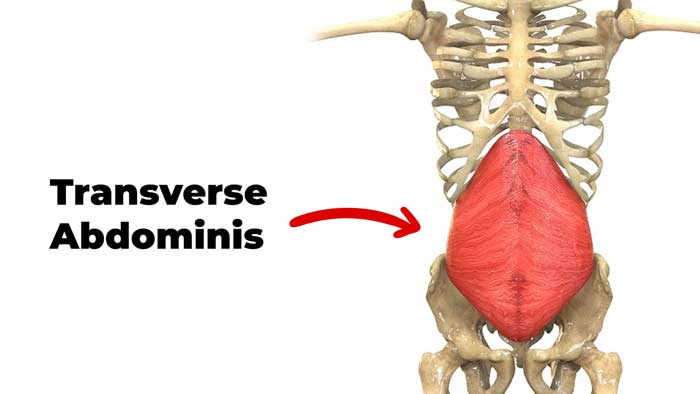
But after hours of slouching, it goes dormant.
Suddenly, your spine’s got no backup.
So, how do you wake up your body’s built-in safety belt?
Let me show you…
TRX Transverse Abdominis Core Exercise
Just doing the plank isn’t enough to engage your transverse abdominals….
You’ve got to squeeze your core and draw your belly button back towards your spine as you hold the position…
- Focus on squeezing your abs and bringing your belly button towards your spine.
- Hold that for as long as you can.
- Keep drawing your belly button back towards your spine.
Planks are great for waking this muscle up. But on their own, they leave a gap in your core strength, because they only train it while you’re still.
I’ll show you how to fill that gap in the workout plan below.
Now that you’ve reactivated your internal support system,
let’s move to the tiny muscles that, when weak, are responsible for recurring back pain…
Core 5: Gain Rock-Solid Spinal Stability
Imagine your spine is like a stack of building blocks, and each block needs its own tiny shock absorber to keep it stable.
That’s your Multifidus
Small muscles that attach to the vertebrae.
Their job is to fine-tune the position of every single spinal joint as you move….
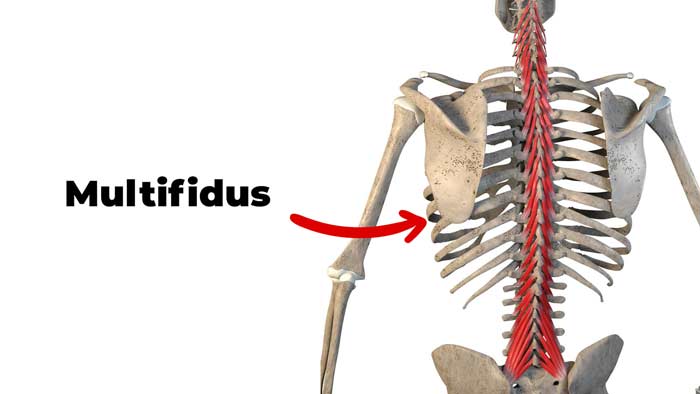
But when you sit all day, these tiny muscles essentially fall asleep.
So when you do move, each vertebra shifts and wobbles like a loose stack of blocks instead of a solid, stable column.
Leading to nagging back pain.
So how do you strengthen these shock absorber muscles?
Let me show you…
TRX Multifidus Core Exercise
Get on your side and get both feet in the straps ready for a side plank…
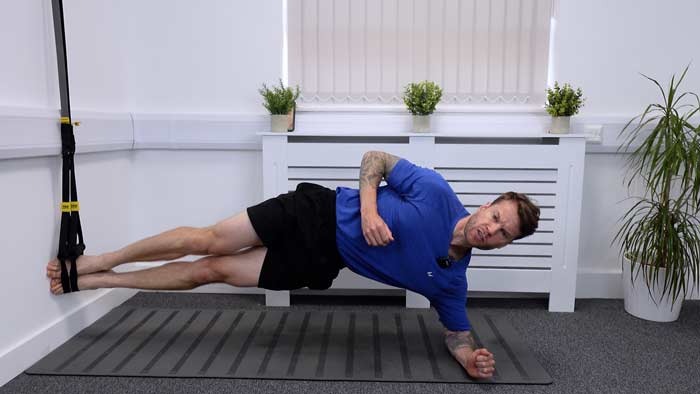
- Bring your hips upwards, and be sure to keep tension in your entire core.
- Hold this position here for as long as you can.
- AND as straight as you can.
Now that you’ve activated those deep spinal stabilisers,
let’s move to the foundation muscle that supports everything above it…
Core 6: Carry Loads with Ease (Foundations)
Think of your pelvic floor like the foundation of a house.
It’s a hammock of muscles stretching from your pubic bone to your tailbone—supporting everything above it.
When you lift something heavy, this foundation should kick in automatically to handle the pressure…
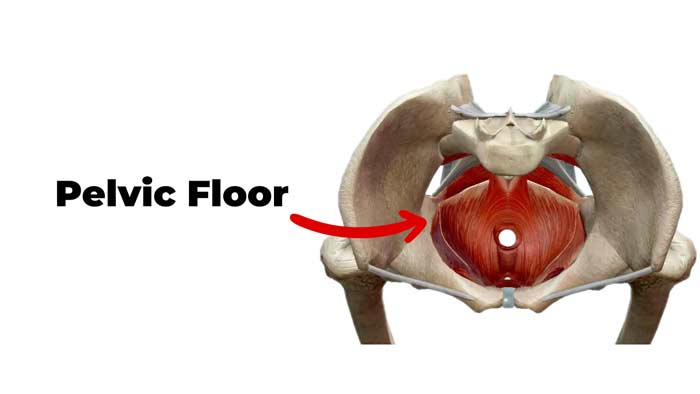
But if it’s weak?
It’s like building a house on a cracked foundation—unstable and risky
So how do you strengthen it?
Let me show you
TRX Pelvic Floor Core Exercise
Glute bridges are king for this; HOWEVER, before you raise your glutes to the ceiling, you need to engage your pelvic floor.
So imagine you’re at the toilet and you’re stopping the flow of urine.
Once you’ve done that, then drive your hips towards the ceiling, squeezing your glutes hard…
- Really focusing on stopping that flow of urine
- Squeeze your glutes hard and hold this position for as long as you can
Now that you’ve set your foundation
let’s tackle the muscle everyone knows—but most train completely wrong…
Core 7: Build Solid Abs You Can Feel
Your rectus abdominis is the six-pack muscle everyone obsesses over.
Its main job is to round your spine, bringing your ribcage and pelvis together, while working with all your other core muscles to create stability…
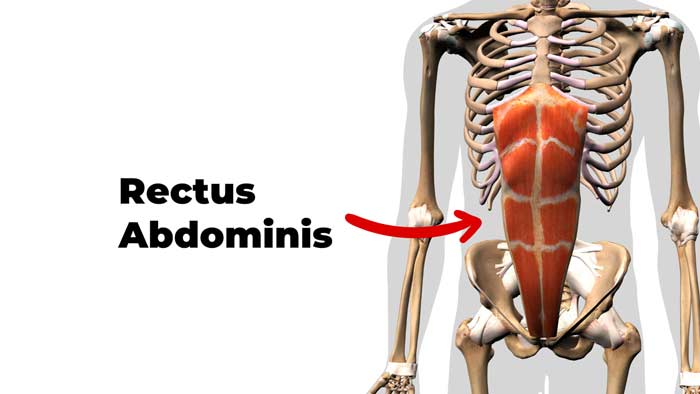
But here’s the problem: most people do endless crunches that only train this muscle in a tiny range of motion.
Like training your biceps by only doing the last inch of a curl.
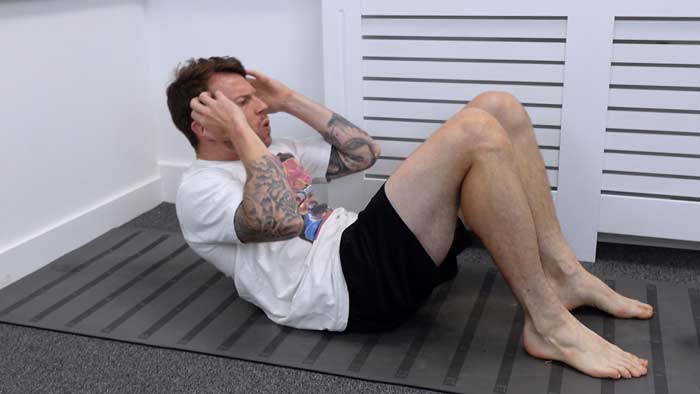
That means most of your six-pack stays weak, leaving your core unstable and underdeveloped.
And here’s the other mistake: keeping your back flat. If your back stays flat while you pull your knees in, it’s your hip flexors doing the work, not your abs.
So how do you actually build a strong, functional six-pack?
Let me show you…
TRX Rectus Abdominis (Abdominals) Exercise
Set your straps to mid-shin height, get both feet in, toes pointing down, and get into a push-up position with your arms fully extended.
Quick tip: if this position hurts your wrists, turn your hands out slightly, or drop onto your forearms.
Start by gently lowering your hips to stretch your abs.
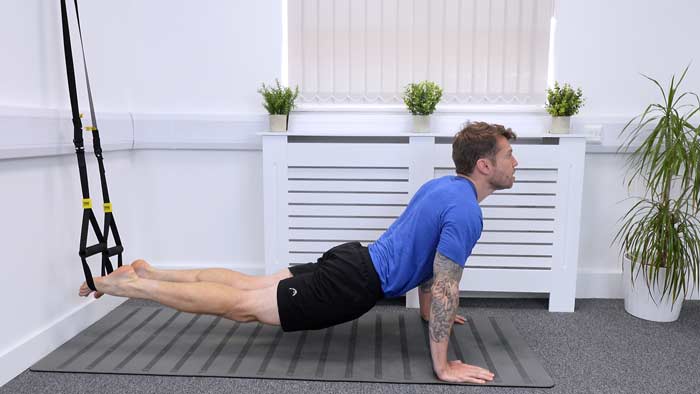
Exhale, then pull your knees to your chest, BUT think of a C-shaped curve.
Imagine pulling your hips towards your chest, rather than just dragging your knees in. That’s the difference between working your abs and your hip flexors.
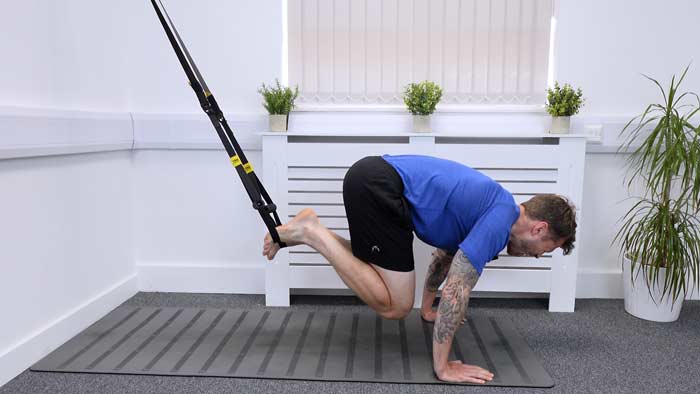
Squeeze your abs hard and pause at the top.
Slowly control the way back down to your starting plank.
You’re taking your abs from a stretched position to a tightly contracted one, for a much bigger range of motion.
Too hard? Start with a small hip raise from the plank, like an inverted V. Hold for a second at the top, squeezing your abs, then lower slowly. Once you’re stronger, add a mini knee tuck at the top, and build up to the full tuck.
Too easy? Slow down the lowering. Take 3–4 seconds to return to the plank. More time under tension means more muscle.
Now, if abs are your goal, let me show you how to take this 2 steps further…
How to Build Visible, Defined Abs
There are two ways to make your abs more visible:
- Reduce the layer of fat between your abs and your skin.
- Increase the size of your ab muscle fibres, so they’re thicker and show through that fat more.
Most people only think about the first one.
But if you weren’t blessed with thick abs to begin with, like me, the second is a game-changer.

The problem is, most TRX ab exercises you see online don’t build those fibres.
Planks are great for overall core strength, but your abs are just holding still.
They’re not being challenged through a full range of motion.

To build thicker abs, you need to work them from a full stretch to a full squeeze.
And you can bias your upper or lower abs, depending on the exercise:
Lower Abs
bring your bottom half up towards your top half. That’s the knee tuck from Core 7, with that C-shaped curve.
Upper Abs
Fold your top half down towards your bottom half. That’s the Superman from Core 1, but this time focus on driving your chest down towards your hips to fold in, like a standing crunch.
Beginners can start with regular crunches on the floor, curling your spine rather than keeping it flat.
In the video below, I show you exactly how I used these two exercises to build my six-pack, and how to progress them:
How to train them
Treat your abs like any other muscle.
- Do 3 sets of 6–12 reps of each exercise.
- Once you can hit 12 reps on all 3 sets with perfect, slow, controlled technique, make it harder. Slow down the knee tucks, or step back towards the anchor for the Superman.
- Start with once a week. If you’re serious about visible abs, build up to 2–3 times a week.
But remember…
You can have the thickest abs in the world, and they’ll stay hidden if they’re covered by too much fat.
Combine your ab training with full-body muscle building, because more muscle means you burn more fat at rest.
Next, if abs aren’t your main goal, and you just want to focus on a simplified plan for a stronger core to help you in daily life?…
Let me show you exactly which core exercises to do…
Your TRX Core Workout Plan
As we’ve mentioned, as good as planks are, they only train your core in a static position.
What you actually want is a core that stays strong while your arms and legs move and load it from different angles…


The way it works in real life.
I call it moving core strength. And it only takes two exercises to build it:
1. Mountain Climbers (core strength for lower body movement)
Use the 3 levels from Core 2 above, moving up a level once you can do 15 controlled reps each side.
2. Standing Twists (core strength for upper body movement)
One of my clients is a man in his 60s who’d avoided core work for years, because planks and crunches made his back pain worse.
This exercise didn’t just help him finally strengthen his core. It made a huge difference to his back pain as well…
Level 1 – Front-Facing Twists:

- Set your straps to a long length, face away from the anchor, and extend your arms above your head.
- Activate your core with the belly button draw-in.
- Rotate smoothly from side to side like a pair of big windscreen wipers, letting your core drive the movement, not your arms.
- Think smooth twist, not a big swing.
Level 2 – Back-Facing Twists:

Once you can do 15 controlled reps each side, and you’ve done them for a couple of weeks, move on to these.
They strengthen the stabilisers around your lower back and sides.
- Grab both handles together, with your hands wrapped around them and your arms out in front.
- Stand tall and rotate smoothly through your core from left to right, using your arms as a solid pivot point.
- These are hard, so you only need a slight angle.
Your routine:
- Mountain Climbers: 3 sets of 15 reps each side
- Front-Facing Twists: 3 sets of 15 reps each side
- Back-Facing Twists, when you’re ready: 3 sets of 10 reps each side
- Frequency: three times a week to start
I’ve mapped this out into a free 4-week Dynamic Core Strength plan, across two progressive blocks.
It tells you exactly which exercises to do, in what order, and how to progress week by week. Grab it below…
Free Dynamic Core Strength in 4-Weeks (Suspension Trainer Plan)
Build a core that stays strong while you move, protect your lower back, and feel solid in everyday life again…
Which Ones to Focus on for Your Lifestyle
Choose your lifestyle scenario…
1. Desk Warrior
If you spend most of your day sitting at a desk hunched over, focus on these three:
- First Supermans – to strengthen your erector Spinae and fix that slouched posture
- Second, mountain climbers – to strengthen your hip flexors and improve your movement ability
- Third, Planks – to strengthen your Transverse Abdominis and reactivate your natural weight belt
2. Sporting Performance
If you want better performance for sporting activities, prioritise these three:
- First Side Planks – to strengthen your obliques for rotational power and agility
- Second, Mountain Climbers, to strengthen your Hip Flexors for explosive movement
- Third, side bends to strengthen your Multifidus for spinal stability during dynamic movement
3. Parent Core Strength
If you’ve got kids you need to carry around a lot, focus on these three:
- First Planks to strengthen the Transverse Abdominis – your natural lifting belt
- Second, Bridges to strengthen your Pelvic Floor, the foundational support for carrying loads
- Third, supermans to strengthen your Erector Spinae so your spine can handle their weight
More TRX Guides by Body Part
- TRX Chest Exercises
- TRX Arm Exercises
- TRX Core Exercises
- TRX Back Exercises
- TRX Leg Exercises
- TRX Shoulder Exercises
FAQ
Is TRX good for core strength?
It’s one of the best tools there is. The straps are unstable, so your core has to work in almost every exercise, not just the ab moves. On top of that, you can target every layer of your core, from the deep stabilisers to your six-pack, which crunches alone never reach.
What is the best TRX core exercise?
If I could only do one for the rest of my life, it would be TRX Supermans. They take your abs from a huge stretch to a powerful squeeze, and the hold at the top strengthens the muscles that keep you upright. But no single exercise covers everything, so use the lifestyle section above to pick the three that fit you best.
How often should you do TRX core exercises?
2–3 times per week is plenty, and you don’t need long sessions. Pick 2–3 exercises and focus on quality squeezes and holds rather than endless reps. Your core is also working in most of your other TRX exercises, so it’s getting trained more than you think.
Can TRX exercises help with lower back pain?
They can help, because a weak core is one of the most common reasons backs get sore. Exercises like side planks, supermans, glute bridges and standing twists strengthen the muscles that support and stabilise your spine. If you already have back pain, though, check with a doctor or physio first, start slowly, and stop anything that makes it worse.
Can you get a six-pack with TRX?
Yes. A TRX is great for building thicker, stronger abs, especially knee tucks and supermans done with a curved spine through a full range of motion. But visible abs also come down to body fat, so pair your ab training with full-body TRX workouts and good nutrition. See the “How to Build Visible, Defined Abs” section above for the full approach.
Here’s the thing…
A rock-solid core won’t get you far if your legs are crumbling underneath you.
It’s like building a skyscraper on quicksand.
Here’s to your Fitness Freedom
Coach Adam, aka TRX Traveller


0 Comments